
Why Consistency, Repetition, Studio Rentals, and Creative Community Are the Keys to Growing as a Professional Photographer
Every great photographer started somewhere.
Nobody picks up a camera for the first time and immediately understands lighting, composition, posing, colour, creative direction, and visual storytelling.
Those skills are developed over time.
Through practice.
Through experimentation.
Through mistakes.
And perhaps most importantly, through repetition.
The secret to becoming a better photographer isn't always buying better equipment. It's creating more opportunities to shoot.
Whether you're an aspiring photographer building your first portfolio or an experienced professional looking to push your creative boundaries, shooting frequently is one of the most effective ways to develop your skills and discover your photographic style.
At The Production Studio, a professional Photography Studio Toronto creatives can use to learn, experiment, and collaborate, the philosophy is simple:
The more you create, the better you become.
And having access to the right space, equipment, workshops, and creative community can make that journey considerably more rewarding.
Why Repetition Is the Foundation of Great Photography
Photography is both a technical skill and a creative art form.
Understanding your camera settings is important, but knowing how to use those settings instinctively is something entirely different.
That instinct comes from repetition.
The more frequently you photograph, the more naturally you begin to understand:
How light falls across a face
How shadows create depth
Which lenses work best for different subjects
How to direct a model
How to compose an image
How to work with different backgrounds
How to solve unexpected problems
How to communicate your creative vision
Eventually, you stop thinking about every technical decision.
You simply create.
And that's when photography becomes particularly exciting.
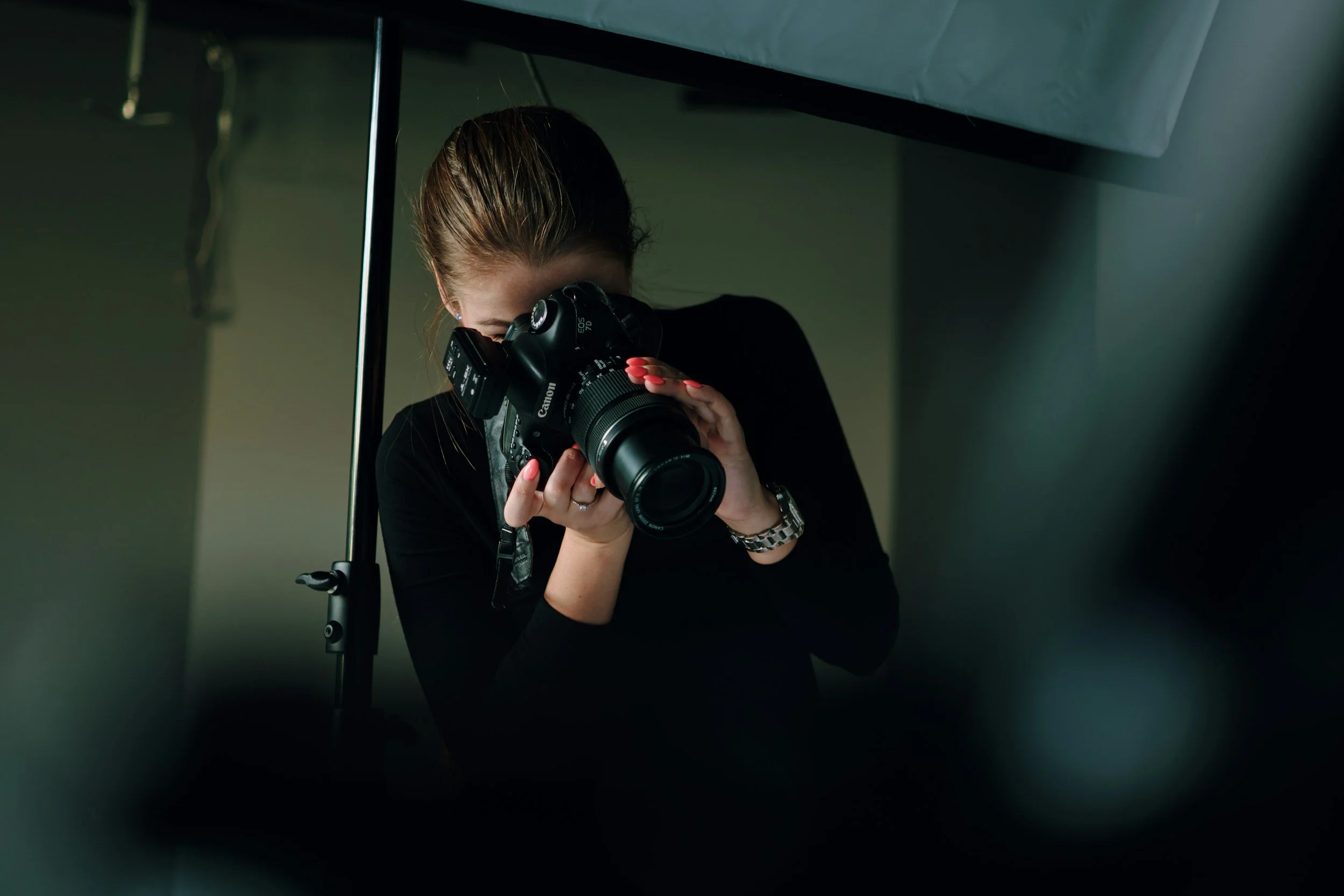
Practice Builds Creative Confidence
Think about the first time you tried using studio lighting.
You probably spent considerable time adjusting your lights, checking your exposure, moving stands, and trying to understand why the image didn't look the way you imagined.
Now imagine repeating that process every week.
After several sessions, you begin recognizing lighting patterns.
You know where to place your key light.
You understand how changing the distance of a softbox affects the subject.
You become comfortable experimenting with shadows.
And instead of spending an hour trying to create one lighting setup, you might accomplish it in minutes.
Repetition turns technical knowledge into creative freedom.
That's one of the biggest advantages of regularly booking a Toronto Studio Rental.
Shoot More Often, Even When You Don't Have a Client
One of the biggest mistakes emerging photographers make is waiting for paid work before picking up their camera.
But if you only photograph when someone hires you, your creative development becomes dependent on your client schedule.
Professional photographers understand the importance of personal projects.
These are opportunities to experiment without the pressure of delivering a specific result.
You can:
Try a new lighting technique
Photograph a model
Create a fashion editorial
Experiment with colour
Develop a conceptual portrait series
Practice product photography
Test different lenses
Explore dramatic lighting
Work with makeup artists and stylists
Create images for your portfolio
Not every shoot needs to generate revenue.
Sometimes the value comes from what you learn.
And sometimes the photographs you create for yourself become the images that attract your next client.
Why Renting Different Photography Studios Can Make You More Creative
Working in unfamiliar environments forces photographers to adapt.
Every studio has different characteristics.
Different window placements.
Different natural light.
Different dimensions.
Different backgrounds.
Different equipment.
Different possibilities.
When you book different creative spaces, you challenge yourself to see things differently.
A smaller studio might encourage intimate portraits.
A larger studio might inspire elaborate fashion photography.
A natural-light space might lead to softer lifestyle imagery.
A controlled studio environment might inspire dramatic commercial lighting.
Exploring different environments can help you become a more versatile photographer.
The goal isn't simply to photograph in more places. It's to learn how to create great images wherever you are.
For photographers searching for a Photo Studio for Rent Toronto, experimenting with different spaces and lighting conditions can be an important part of creative development.
The Benefits of Returning to the Same Photography Studio
While exploring different studios can expand your creativity, there is also tremendous value in regularly returning to a familiar space.
In fact, working repeatedly in the same studio can accelerate your development in ways you might not expect.
When you know a studio well, you understand its possibilities.
You know how the natural light changes throughout the day.
You know where to position your equipment.
You know which backgrounds work best.
You understand how much room you have.
You become familiar with the available grip equipment.
And you develop an efficient workflow.
Instead of spending your rental time learning the space, you spend it creating.
Familiarity Creates Efficiency
Imagine returning to The Production Studio every few weeks.
During your first visit, you're learning the layout.
During your second visit, you're experimenting with lighting.
By your fifth visit, you know exactly how to set up for the portraits you want to create.
After several months, the studio begins to feel like an extension of your creative process.
That familiarity gives you confidence.
It allows you to focus on the subject rather than the surroundings.
And it can help you produce more work in less time.
Why Having a Creative Home Can Change Your Career
There comes a point when some photographers need more than occasional studio rentals.
They need a place they can return to consistently.
A place where they can develop ideas.
A place to meet clients.
A place to build their portfolio.
A place to collaborate.
A place that feels like home.
That's where becoming a Resident Artist at The Production Studio can be particularly valuable.
Having an ongoing relationship with a professional creative environment can provide consistency and a sense of belonging that occasional rentals may not offer.
A Place to Build Your Professional Identity
Your studio becomes part of how you present yourself.
Instead of constantly searching for somewhere to photograph your next client, you have a familiar professional environment.
You can confidently plan shoots.
You can develop recurring creative projects.
You can build relationships with other photographers.
You can create a consistent experience for clients.
And you can begin establishing yourself as a professional photographer with a recognizable creative practice.
A resident artist arrangement isn't simply about having somewhere to work.
It's about having somewhere to grow.
For photographers considering a Creative Studio Toronto, that sense of consistency and community can be just as valuable as the physical space itself.
Photography Workshops: Practice With Purpose
Shooting frequently is important.
But repetition becomes even more valuable when you're learning something new.
That's where photography workshops come in.
Workshops provide structured opportunities to develop technical skills, experiment with creative ideas, and learn from experienced photographers.
Instead of trying to figure everything out independently, you can observe techniques, ask questions, and apply what you've learned immediately.
The Production Studio has developed workshops and creative learning opportunities that bring photographers together to practice their craft.
Depending on the workshop, participants may explore:
Portrait photography
Fashion photography
Beauty photography
Studio lighting
Creative direction
Working with models
Posing and expression
Portfolio development
Lighting techniques
Artistic concepts
These experiences can be valuable for beginners and experienced photographers alike.
Why Attending Multiple Workshops Makes a Difference
Attending one workshop can teach you a new technique.
Attending workshops regularly can help you develop an entirely new skill set.
For example, your first beauty photography workshop might introduce you to a particular lighting setup.
At the next workshop, you might become more comfortable directing models.
A third workshop might inspire you to experiment with colour, makeup, or dramatic shadows.
Over time, those individual lessons begin to connect.
You develop a deeper understanding of the entire creative process.
And you build a portfolio that demonstrates increasingly sophisticated work.
The Power of Learning From Other Photographers
Photography can be surprisingly isolating.
You photograph your clients.
You go home.
You edit.
You deliver the images.
Then you repeat the process.
While independent work is important, spending time with other photographers can expose you to ideas and techniques you might never discover on your own.
Workshops, studio rentals, and resident artist communities create opportunities for those connections.
You might meet someone who specializes in fashion photography.
Another photographer might introduce you to a new lighting modifier.
Someone else might share advice about pricing, client management, or commercial production.
And occasionally, a conversation turns into a collaboration.
Creative communities help photographers grow because knowledge, experience, and inspiration are shared.
That's part of what makes The Production Studio more than simply a Toronto Studio Rental.
It's an environment where photographers can connect through a shared passion for creating images.
Your Portfolio Should Never Stop Evolving
A photography portfolio is more than a collection of your favourite images.
It's a representation of your abilities, creative vision, and the type of work you want to attract.
But your portfolio shouldn't remain unchanged for years.
As you develop your skills, your portfolio should evolve with you.
Regular shooting gives you the opportunity to replace older images with stronger work.
You can introduce new styles.
Experiment with different subjects.
Create more sophisticated lighting.
Work with new creative teams.
And gradually develop a recognizable visual identity.
Create the Work You Want to Be Hired For
Want to become a commercial photographer?
Start creating commercial-style images.
Want to photograph fashion?
Organize fashion shoots.
Interested in beauty photography?
Collaborate with makeup artists and models.
Want to specialize in corporate branding?
Develop a portfolio of professional portraits and branding images.
Don't wait for someone to hire you to create the work you want to be known for.
Create it first. Then use that work to show potential clients what you can do.
Why Creative Repetition Doesn't Mean Taking the Same Photograph
There is an important difference between repetition and simply doing the same thing over and over.
Repetition should help you improve.
That means challenging yourself.
If you've mastered a basic one-light portrait, try using two lights.
If you're comfortable photographing people against a white background, experiment with darker backgrounds.
If you normally use soft lighting, explore hard light.
If you always photograph with an 85mm lens, try a wider focal length.
If you usually work alone, collaborate with a makeup artist or stylist.
The goal is to introduce new challenges while strengthening your existing skills.
Think of every studio session as an opportunity to improve one specific part of your photography.
Small improvements accumulate.
And over time, they can lead to significant creative growth.
The Production Studio: A Space Where Practice Becomes Progress
The Production Studio provides a professional environment where photographers can develop their craft through regular shooting, creative experimentation, and collaboration.
With spacious shooting areas, natural light, professional grip equipment, makeup and changing facilities, kitchen amenities, and convenient equipment access, the studio supports a wide range of photographic projects.
Whether you're photographing your first model or producing a commercial campaign, having a dedicated space allows you to focus on your creative goals.
The studio can support:
Portrait and headshot photography
Fashion and beauty editorials
Product photography
Commercial photography
Personal branding
Portfolio development
Creative collaborations
Photography workshops
Video and content production
For photographers searching for a professional Photography Studio Toronto, the value isn't simply in renting a room.
It's in having a place where you can return, experiment, learn, and create.
How Often Should You Practice Photography?
There isn't one schedule that works for everyone.
But consistency matters more than occasional bursts of activity.
If you're serious about improving, consider developing a regular creative routine.
For example:
Every week: Practice a specific technique, even if it's a small personal project.
Every two weeks: Organize a portrait session, product shoot, or creative collaboration.
Every month: Book a professional studio and create new portfolio work.
Every few months: Attend a workshop to learn something outside your comfort zone.
Throughout the year: Review your portfolio, identify areas for improvement, and set new creative goals.
The exact schedule matters less than your commitment to maintaining it.
A photographer who practices consistently throughout the year may develop skills more steadily than someone who shoots intensively for a weekend and then doesn't touch their camera for months.
A Simple Six-Month Plan to Become a Better Studio Photographer
If you're ready to take photography more seriously, here's a practical way to structure your development.
MonthCreative FocusGoal1Master one-light portraitsUnderstand light direction and quality2Explore different lighting setupsImprove technical confidence3Attend a photography workshopLearn from other photographers4Collaborate with a model and makeup artistPractice creative direction5Create a themed portfolio shootDevelop a consistent visual style6Review and refine your portfolioIdentify strengths and plan your next steps
You don't need to master everything in six months.
The goal is to develop momentum.
And once you establish that momentum, photography becomes a regular part of your creative life rather than something you do occasionally.
From Hobbyist to Professional: The Importance of Showing Up
What separates a hobbyist from a professional photographer?
It isn't simply the camera they own.
It isn't the number of followers they have.
And it isn't necessarily how long they've been photographing.
Professional photography also involves reliability, preparation, communication, consistency, problem-solving, and the ability to deliver quality work.
Frequent shooting helps develop those habits.
You learn how long setups take.
You become better at directing people.
You develop more efficient workflows.
You learn how to manage your time.
You become comfortable working with a team.
You learn to solve problems without becoming overwhelmed.
These are the skills that clients value.
And they're difficult to develop without experience.
The more often you put yourself in real shooting situations, the better prepared you become for professional opportunities.
Frequently Asked Questions
Does shooting more often really make you a better photographer?
Yes, particularly when you practice with specific goals. Frequent shooting helps develop technical confidence, improve creative decision-making, strengthen problem-solving skills, and build experience working with different subjects and lighting conditions.
Is renting a photography studio worth it for beginners?
A professional studio can provide a controlled environment for learning lighting, composition, posing, and creative direction. Renting occasionally also allows beginners to experiment without committing to the cost of owning a permanent studio.
How can photography workshops help build a portfolio?
Workshops can provide structured shooting opportunities, access to different creative concepts, and experience working with models and other professionals. Before using workshop images commercially, photographers should confirm the applicable image-use permissions.
What are the benefits of becoming a resident artist?
A resident artist relationship can provide greater consistency, stronger community connections, and a professional environment for developing creative work. Specific access arrangements and benefits depend on the studio's resident artist program.
Should photographers use different studios or stick with one?
Both approaches offer advantages. Different studios encourage adaptability and creative exploration, while regularly working in the same space builds familiarity, efficiency, and confidence. Combining both can help photographers become more versatile.
Stop Waiting for Inspiration. Start Creating It.
Every photographer wants to create better images.
More powerful portraits.
More compelling commercial work.
More creative fashion editorials.
More memorable photographs.
But great work rarely happens by accident.
It comes from showing up.
From experimenting.
From trying something that doesn't work.
From learning why it didn't work.
From trying again.
From working with other creatives.
From stepping outside your comfort zone.
And from making photography a consistent part of your life.
Whether that means booking different photography studios, returning regularly to a favourite space, becoming a resident artist, or attending photography workshops, every opportunity to create is an opportunity to improve.
You don't become a professional photographer by waiting until you're ready. You become ready by doing the work.
Your Next Great Photograph Starts at The Production Studio
At The Production Studio, we believe creativity grows through experience.
Whether you're a beginner exploring studio photography, an emerging photographer building your portfolio, or an established professional looking for new inspiration, having access to the right creative environment can help you take the next step.
Book a studio.
Try something new.
Attend a workshop.
Meet another photographer.
Collaborate with a creative team.
Explore becoming a resident artist.
And most importantly, keep shooting.
Because every photograph teaches you something.
Every session builds confidence.
Every collaboration creates possibilities.
And every time you pick up your camera, you're one step closer to becoming the photographer you want to be.
Shoot more. Experiment often. Create without limits.
Discover studio rentals, photography workshops, and creative opportunities at The Production Studio in Toronto.
